
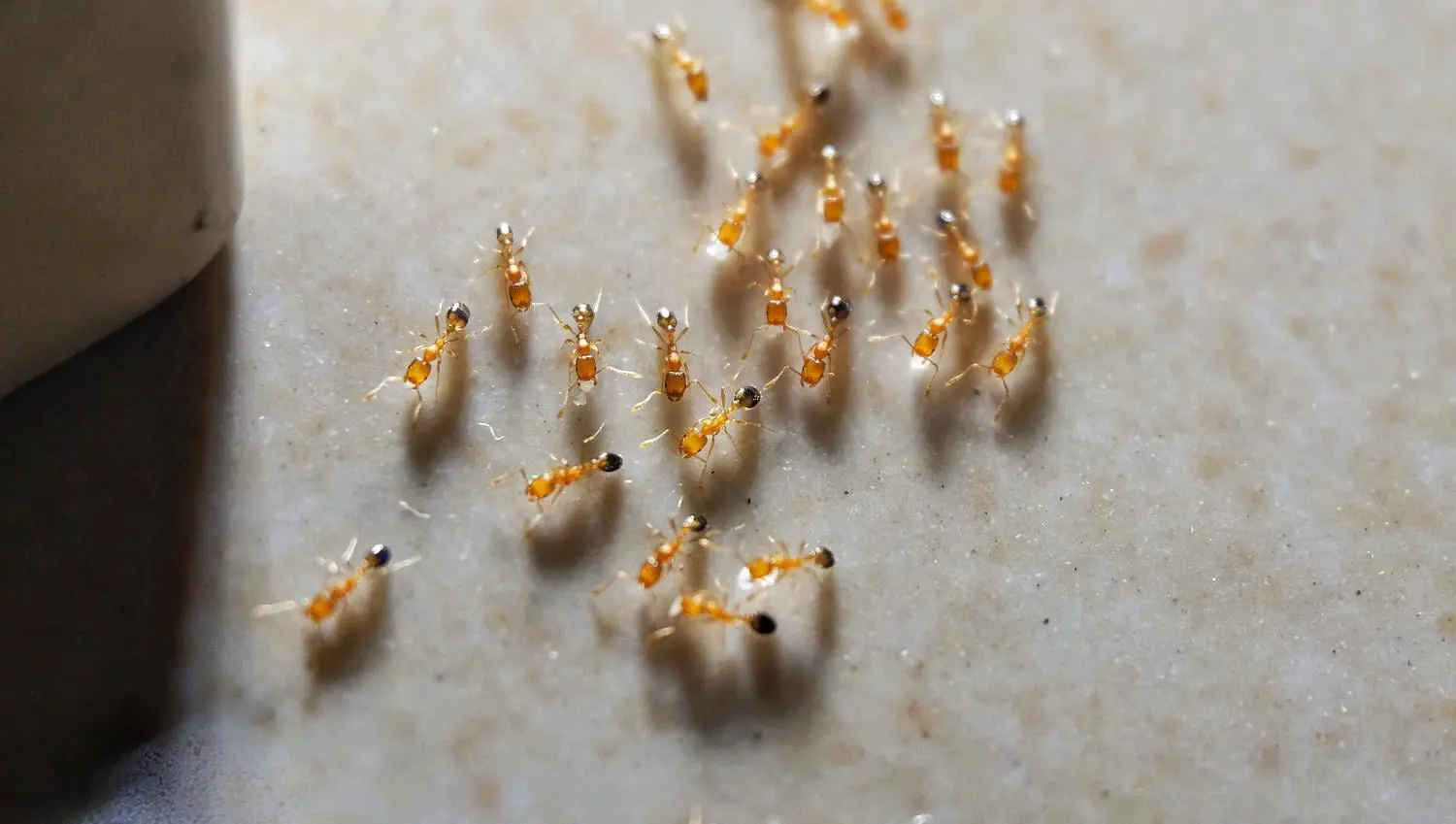
Why DIY Sprays fail you
Ants have an incredible sense of smell and are highly attracted to food—especially sugary items. However, relying on store-bought sprays often fails. Why? Because sprays only kill the worker ants you see. They do not reach the Queen hidden deep in the nest. In fact, spraying certain species (like Pharaoh Ants) can cause the colony to split and spread even faster.
Health Hazards
Species like Pharaoh ants can spread bacteria to your food.
Structural Damage
Carpenter ants burrow into wood, compromising your property's integrity.
Discomfort
Fire ants inflict painful stings that can trigger allergic reactions.

An infestation isn't always obvious until it's too late.
Look out for these signs:

Persistent Presence
You continue to find ants even after thorough cleaning.
The Marching Line
Visible trails of ants moving back and forth around food sources, water, or pantry cupboards.
Nesting Signs
Small piles of fine dirt or soil (frass) near walls or skirting boards—this indicates a nest is nearby, though the nest itself is usually difficult to spot.
Know Your Enemy
Types of Ants
In Singapore, not all ants are the same. We commonly encounter:
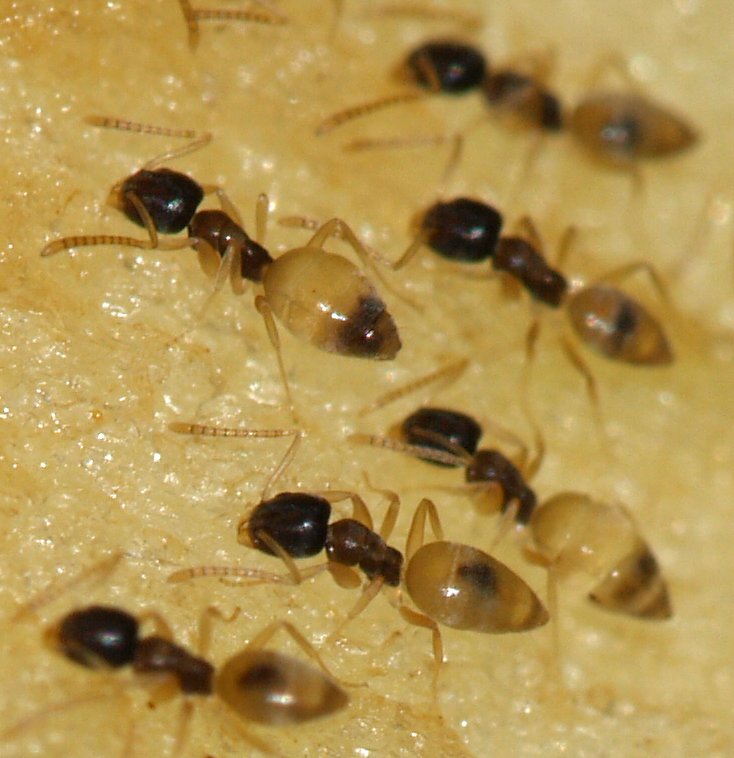
Pale legs and dark heads; very small.
BehaviorAttracted to moisture and sugary foods. They often nest in kitchens and bathroom cabinets.

Pale legs and dark heads; very small.
BehaviorAttracted to moisture and sugary foods. They often nest in kitchens and bathroom cabinets.
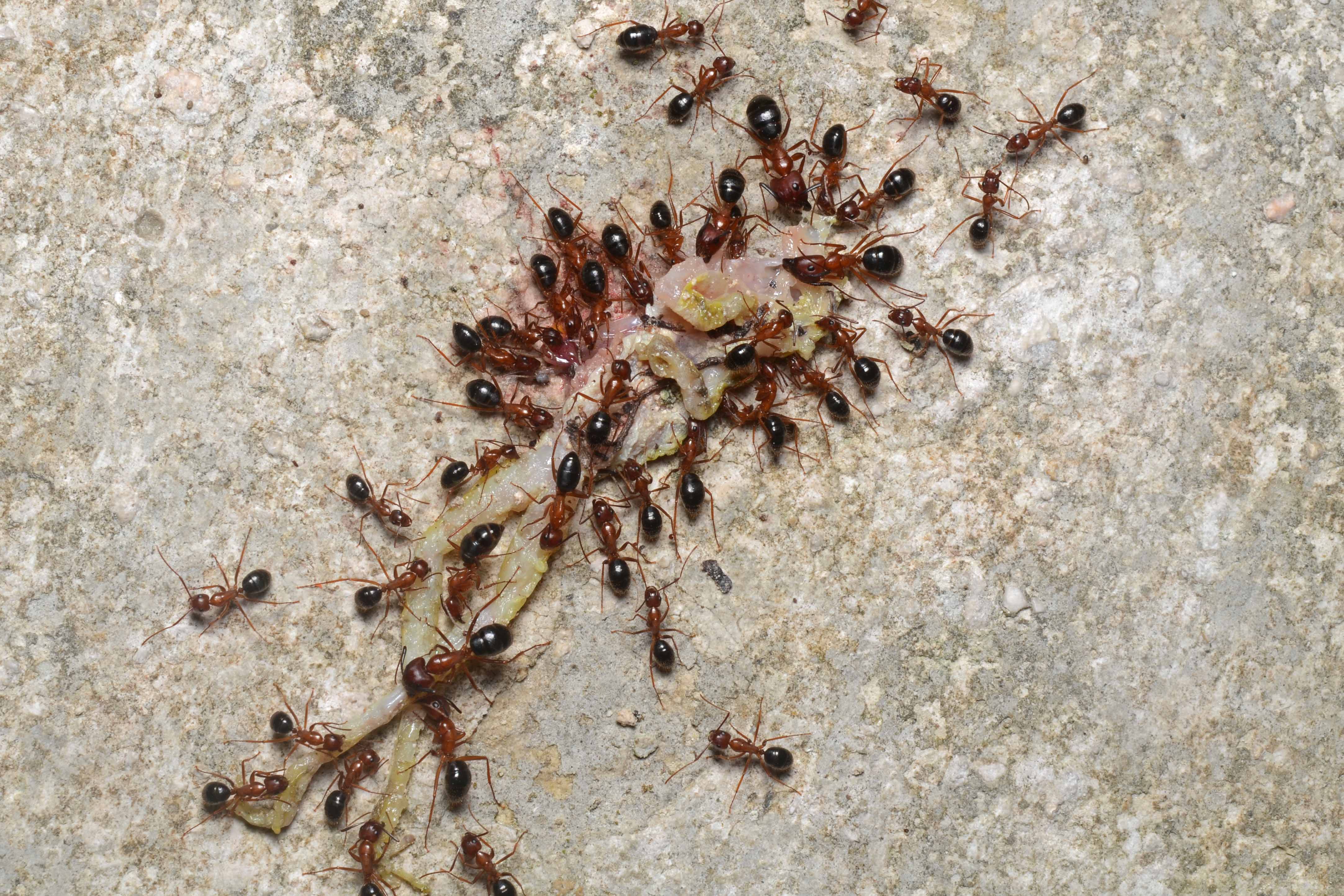
Pale legs and dark heads; very small.
BehaviorAttracted to moisture and sugary foods. They often nest in kitchens and bathroom cabinets.

Pale legs and dark heads; very small.
BehaviorAttracted to moisture and sugary foods. They often nest in kitchens and bathroom cabinets.
Process
How we eliminate the colony
We use a systematic approach to ensure the infestation is handled at the source:
Species Identification
We first identify the correct ant species. This is crucial because a Carpenter Ant requires a different treatment than a Pharaoh Ant.
Locate Entry Points
We trace trails back to cracks, crevices, and entry points.
Targeted Formulation
We select the best method for your specific premises—using slow-acting baits that workers carry back to the nest to kill the Queen.
Treatment Application
Utilization of professional insecticide sprays, gels, and mists to target the nest directly.
After-Care
We provide post-service advice on prevention to keep them from coming back.
Prevention Tips
Once we clear the infestation, follow these steps to maintain a pest-free home:

Starve Them Out
Eliminate food and water sources. Cleanliness is the first line of defense.

Seal the Fortress
Seal cracks, gaps, and crevices around windows, doors, and foundations.
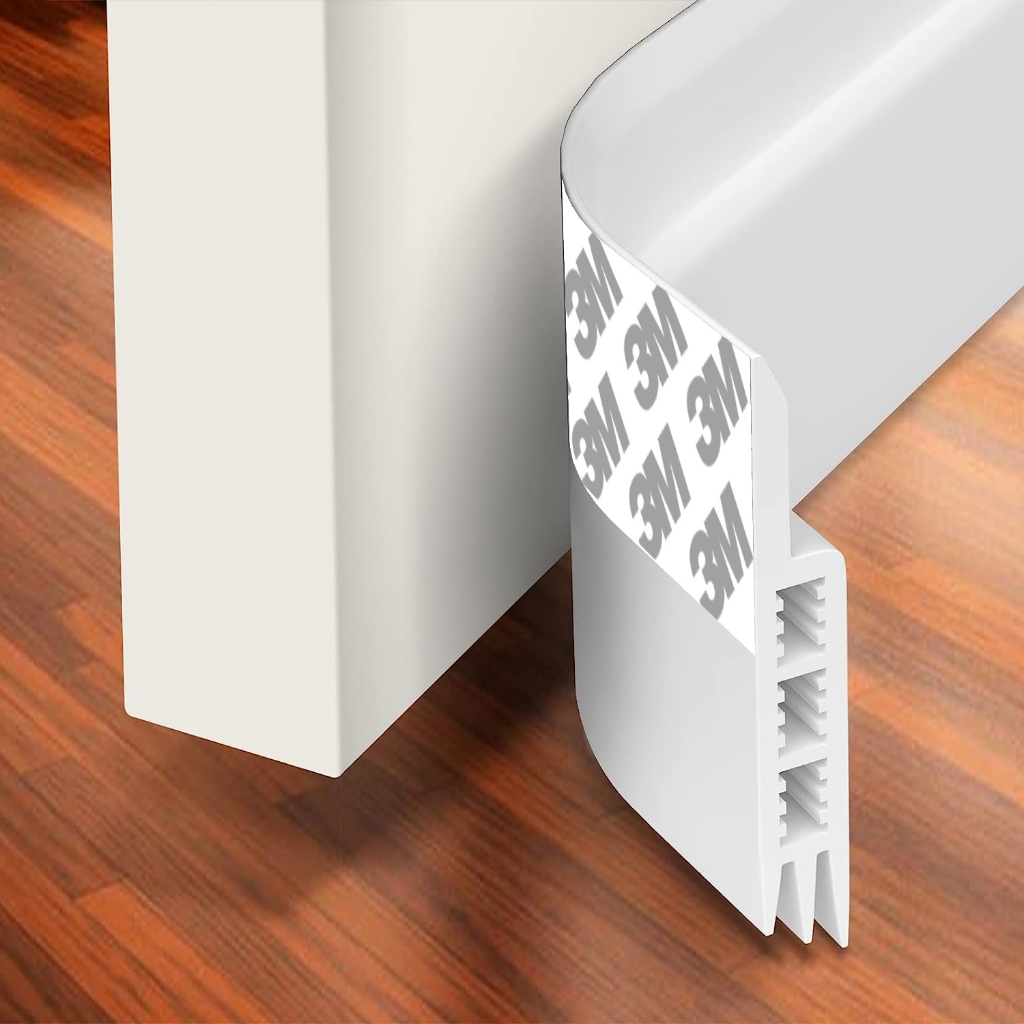
Block the Path
Install door sweeps to block gaps below doors where scouts might enter.
Frequently Asked Questions (FAQ)
Are the ant gels/baits safe for my children and pets?
We place baits in strategic, hard-to-reach areas (like hinge gaps and cracks). The active ingredient concentration is low enough to be safe for mammals but lethal to ants. However, we always recommend keeping pets away from the treated area for a short period while the treatment dries.
Why do I see more ants after you put down bait?
This is actually a good sign! The bait contains an attractant. We want the worker ants to swarm the bait, eat it, and carry it back to the nest. Do not kill these ants; let them do the work of poisoning the colony for you.
How long does it take to get rid of the infestation?
Depending on the size of the colony and the species, it typically takes 7 to 14 days for the entire colony to collapse after baiting.
Have a pest problem?
Let's talk about it.
Please do not hesitate to contact us if you have any enquiry. Leave us a message and we will get back to you shortly.
25 Kaki Bukit Place,
Level 3, Singapore 416203
(65) 6741 1522
hello@pestx.sg